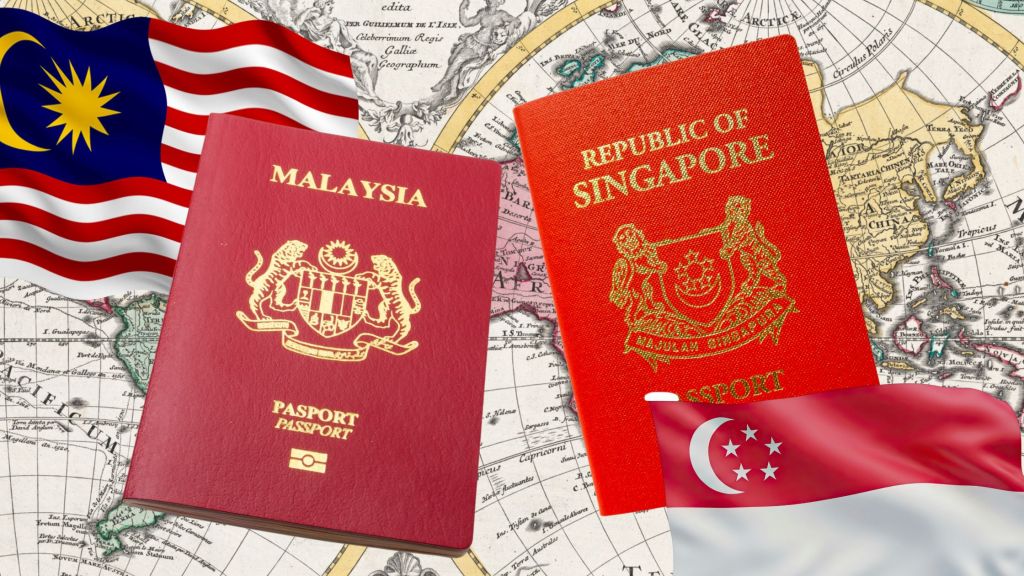
Excitement had been abuzz these past few days with the announcement that lil’ ol’ Malaysia has the SECOND STRONGEST PASSPORT IN THE WORLD! MALAYSIA BOLEH! Well, perhaps this shouldn’t have come as a surprise as Malaysia did rank at number three in 2025 according to the same Passport Index ranking as compiled by Arton Capital. However, that position last year was shared with a total of 15 other countries, namely Belgium, France, The Netherlands, Germany, Finland, Luxembourg, Italy, Denmark, Portugal, Switzerland, Greece, Austria, Norway, Ireland and South Korea. Not a bad group of nations to be included in, for sure, but Singapore was already at second position, tied with Spain and with the United Arab Emirates (UAE) at the top in 2025. While 2026 sees UAE again on top, Singapore ties with Malaysia as second-strongest passport in Global ranking as assessed by Passport Index. (Note: On the Henley Passport Index, Singapore ranks first while Malaysia sits at seventh position along with Australia, Canada, Czechia, Latvia, New Zealand, Slovakia and Slovenia… pretty interesting list).
Global Passport Index 2026: Which Countries Join Malaysia and Singapore In The Top 10?
Where do other countries sit in this global passport rankings for 2026, you may ask. The top ten countries with strongest passports in 2026 in terms of global mobility are as follows (with total number of countries its citizens can visit visa-free in brackets):-
- United Arab Emirates (138)
- Singapore (140); Malaysia (129)
- Spain (135)
- Belgium (132); France (132); Denmark (131); Germany (131); Sweden (131); The Netherlands (131); Finland (131); Italy (131); Switzerland (130); Greece (130); Portugal (130); Austria (129); Norway (127); Ireland (126); Japan (126);
- Malta (132); Poland (129); Hungary (129); Croatia (128); Latvia (128); South Korea (126)
- Romania (129); Slovenia (128); Czech Republic (128); Slovakia (128); Bulgaria (128); Estonia (127)
- Cyprus (128); Lithuania (126); United Kingdom (125)
- Canada (122); Liechtenstein (121); New Zealand (120)
- Iceand (121); Australia (117)
- United States of America (121)
As can be seen, in just the top ten rankings, Malaysia places higher than 37 other countries, including nations that have often been seen as having the strongest passports such as the USA, the UK, Switzerland, France, Australia and some Scandinavian countries (read: countries that many Malaysians dream of immigrating to).
However, the rankings also indicate that passport holders of many of these countries can actually travel visa-free to more countries compared to Malaysian passport holders. For example, citizens of Spain can travel visa-free to 135 countries, French passport holders can travel visa-free to 132 countries, and travellers from Switzerland, Greece and Portugal can enter 130 countries without needing a visa – all higher than the Malaysian passport which allows travel to 129 countries without a visa. So why is Malaysia ranked second while all these other countries sit below? The answer lies in the method of calculations used to determine the ranking, which focuses on overall mobility i.e. where it is welcomed, without taking into account visa status.
How Is The Global Passport Index Ranking Calculated?
In calculating a country’s passport strength based on mobility, the originators of the Global Passport Index, Arton Capital – an organisation that facilitates global travel for citizens of the world – looks at overall global mobility, placing the total number of countries a passport holder is allowed to visit or enter as the main criteria regardless of visa requirements. In the diagram below (screenshot from the Global Passport Index website), UAE passport holders can travel to 182 countries overall, with a breakdown of 138 countries where they can travel visa-free, 44 countries where a visa on arrival is needed, while there are 16 countries where UAE citizens need to apply for a conventional visa, some of which may need face-to-face interviews or electronic finger-printing to apply for.
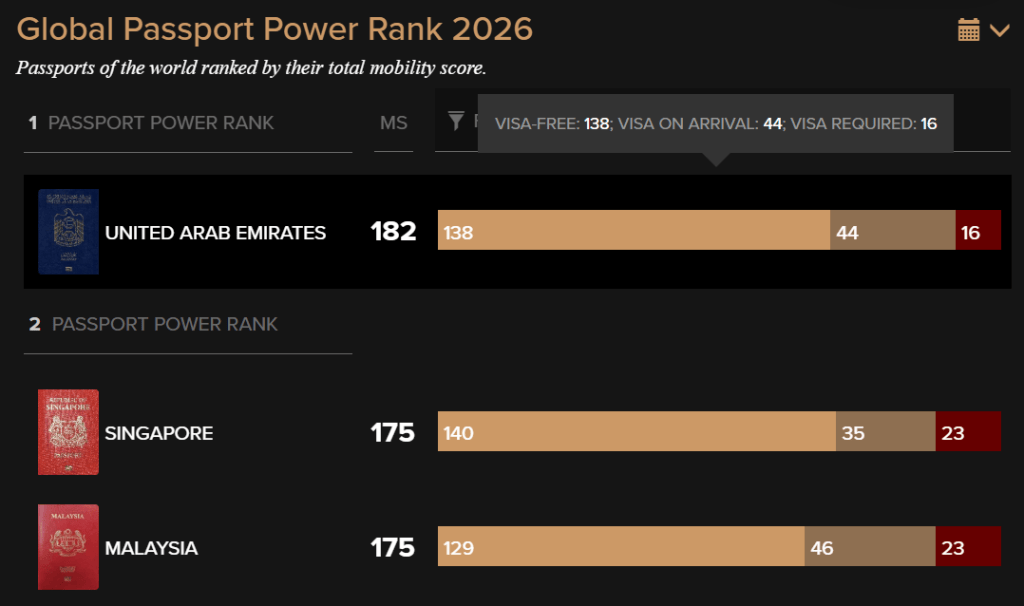
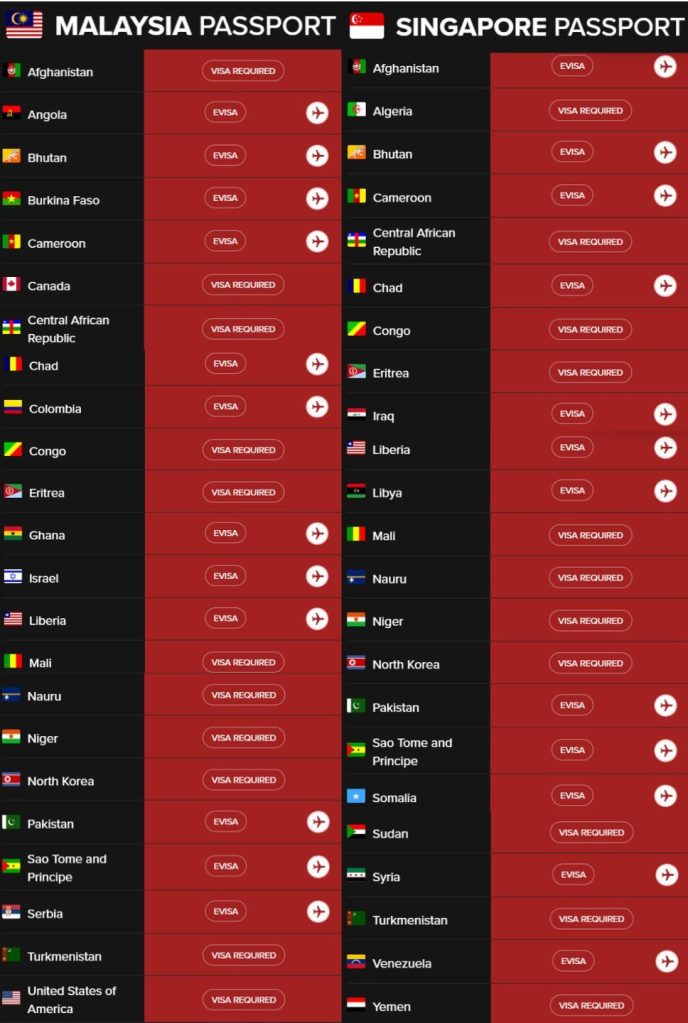
In the case of the passports of Malaysia vs Singapore, while citizens from both countries can visit 175 countries in the world (out of the current total of 199 countries and 6 autonomous territories), Singapore passport holders can travel to 11 more countries visa-free compared to Malaysia passport holders. Meanwhile, citizens of both countries need to apply for visas beforehand before travelling to 23 countries. However, these countries differ for both nations. Interestingly, while travellers with Israeli passports are generally not allowed to enter Malaysia, Malaysians are allowed to enter Israel by applying for an Evisa. This may be to account for visitations to the Al-Aqsa Mosque in East Jerusalem, an important Islamic site that is under Israeli occupation. Of course, it remains at the discretion of Israeli officials whether the Evisa is approved or not.
Malaysia vs Singapore Passport: Countries Requiring Visa Application To Visit or Enter
So Malaysians Can Travel To More Countries Than USA Citizens – What Does It Really Mean?
Yes, it may seem rather ironic that citizens of Malaysia can travel to more countries around the world compared to citizens from the “greatest country in the world.” However, other than the ability to reach about 88% percent of the world, what is the advantage for Malaysians holding such a passport?

As it turns out, there are quite a few perks to being holders of passports ranked second in the entire world. As access to any country is reflective of its relationships with other countries, its diplomatic ties as well as its economic standing, this ranking shows how Malaysia and Malaysians are generally regarded by the government and citizens of other countries.
- A strong passport standing is indicative of international confidence in the security and stability of the country, the integrity of its citizens and the strength of its economy
- For Malaysians, this opens up opportunities not just for travel but also for career growth
- This in turn may positively impact individual financial growth as well as economic and human resource growth for the country
- In laymen terms, this shows how Malaysians will be well-received in most countries they travel to, be it for leisure, business, education or even temporary residence
- This also means that should any Malaysian face problems during their travels, strong international relations with the host country may help facilitate and mitigate any situation.
In a nutshell, it’s pretty sweet to have the second-best passport in the world. Time to breakout the passport and start planning your next trip!